
Spot the Difference Worksheets for Preschool
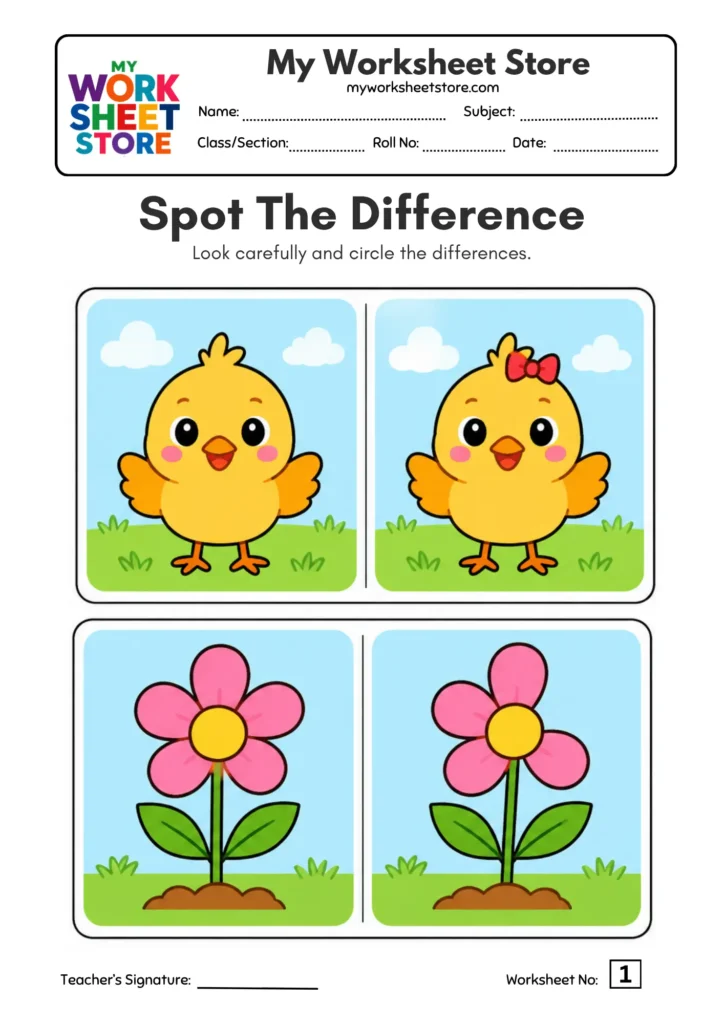
Turn picture comparison into an exciting challenge with these preschool Spot the Difference worksheets. Kids examine pairs of colorful illustrations featuring chicks, flowers, cars, butterflies, cats, apple trees, houses, and fish to identify changes. This activity strengthens visual awareness, focus, and logical thinking through playful observation.
Grade: Preschool
Subject: General Knowledge
Topic: Visual Observation and Reasoning
Skill: Observation, Visual Discrimination, Attention to Detail, Concentration, and Critical Thinking
Pages: 4
Format: PDF
Answer Key: Not required
Similar Worksheets
Everyday Objects Worksheets for Preschool
Find the Pair Matching Worksheets for Preschool
Odd One Out Worksheets for Preschool
Worksheet Details
Little Picture Detectives: Find What Is Different
These Spot the Difference worksheets provide a fun and engaging activity for preschoolers. Across four printable pages, children compare pictures of chicks, flowers, cars, butterflies, cats, apple trees, houses, and fish. They look closely at paired illustrations, identify details that do not match, and circle the differences.
- Spot the Difference Worksheet: Test & Improve Your Child’s Visual Abilities
Have you ever wondered what your children’s perspective is on different things? Do you know whether they can differentiate between similar objects with minute differences? If not, then this is your best chance to know about this in brief. Understand how your child’s visual reflexes work with our best and trending ‘Spot the Difference Worksheet’.
Our worksheet presents very interesting images for children to spot the differences. These images include:
- baby duck and a flower on the 1st page,
- a car and a butterfly on the 2nd page,
- a cat and an apple tree on the 3rd page, and
- a house and a fish on the 4th
All these pictures are given in pairs of 2 with very minute differences between them. By observing and identifying these minute differences, the visual capabilities of your children will surely improve.
The differences given in these similar images not only improve the visual abilities of children, but also make their general knowledge better. Not spotting the differences immediately due to their minuteness may sometimes frustrate or irritate the kids. However, this will eventually sharpen their critical thinking abilities, attention to minute details, and concentration as well. So, to facilitate overall improvement of your child right from preschool, make them perform this Spot the Difference activity without fail.
How to Complete the Activity
- Observe Both Pictures: Look carefully at each illustration and notice the main objects.
- Compare the Details: Check shapes, colors, patterns, and small features to find what has changed.
- Circle the Differences: Mark each difference and check the pictures again for any missed details.
Learning Benefits
These worksheets help children develop visual discrimination, observation, attention to detail, and early reasoning skills. Finding and circling differences also supports pencil control and hand-eye coordination. Parents and teachers can encourage children to name familiar objects and describe the changes they notice to build vocabulary and speaking skills.
Teaching Tips
Encourage children to compare one section of the pictures at a time. Ask simple questions such as "What looks different?" or "Can you find another change?" without giving away the answers. This helps children practise independent observation and problem-solving.
Resource Overview
- Worksheet Type: Spot the Difference Activities
- Recommended Age Group: Preschool and Kindergarten
- Total Pages: 4
- Learning Focus: Visual Observation, Picture Comparison, and Attention to Detail
- Suggested Use: Classroom activities, small-group practice, or learning at home
These printable picture puzzles make learning enjoyable while helping young children practise careful observation and discover differences independently.
Have a suggestion or found an issue?
Help us improve this worksheet by sending us your feedback.
Send us your feedback
Have an idea, found a mistake, or noticed a problem with this worksheet? Let us know.